
The internet is entering a very strange era.
You scroll through social media…
and suddenly you’re asking yourself:
- Was this image created by AI?
- Did a human write this article?
- Is this voice real?
- Is this person even real?
Welcome to the modern digital identity crisis.
Artificial Intelligence has become so advanced that many ordinary people now struggle to distinguish between:
- human-generated content
- AI-generated content
- AI-assisted content
And honestly?
Sometimes the difference is becoming almost impossible to spot.
 “Split-screen human face and AI-generated robotic face”
What Is Artificial Intelligence?
Artificial Intelligence (AI) refers to computer systems capable of performing tasks that normally require human intelligence.
This includes:
- writing;
- image creation;
- coding;
- video generation;
- speech synthesis;
- customer interaction; and
- research analysis.
Generative AI specifically creates entirely new content by learning patterns from massive datasets.
In practical terms:
AI predicts what should come next based on existing information.
The Three Types of Modern Content
Most online material now falls into one of three categories.
1. Human-Generated Content
Created entirely by humans.
Characteristics often include:
- emotional nuance;
- inconsistencies;
- unique storytelling;
- personality; and
- creative unpredictability.
Humans naturally introduce:
- humor;
- imperfection;
- emotional depth; and
- lived experiences.
2. Fully AI-Generated Content
Produced almost entirely by AI systems.
Characteristics often include:
- highly polished structure;
- repetitive phrasing;
- predictable formatting;
- emotionally neutral tone; and
- extremely clean grammar.
Ironically, content that feels “too perfect” can sometimes appear suspicious.
3. AI-Assisted Content
This hybrid model is becoming increasingly dominant.
Humans provide:
- strategy;
- creativity;
- editing;
- storytelling; and
- oversight.
While AI assists with:
- structure;
- brainstorming;
- formatting;
- speed; and
- ideation.
This combination often produces the most effective content.
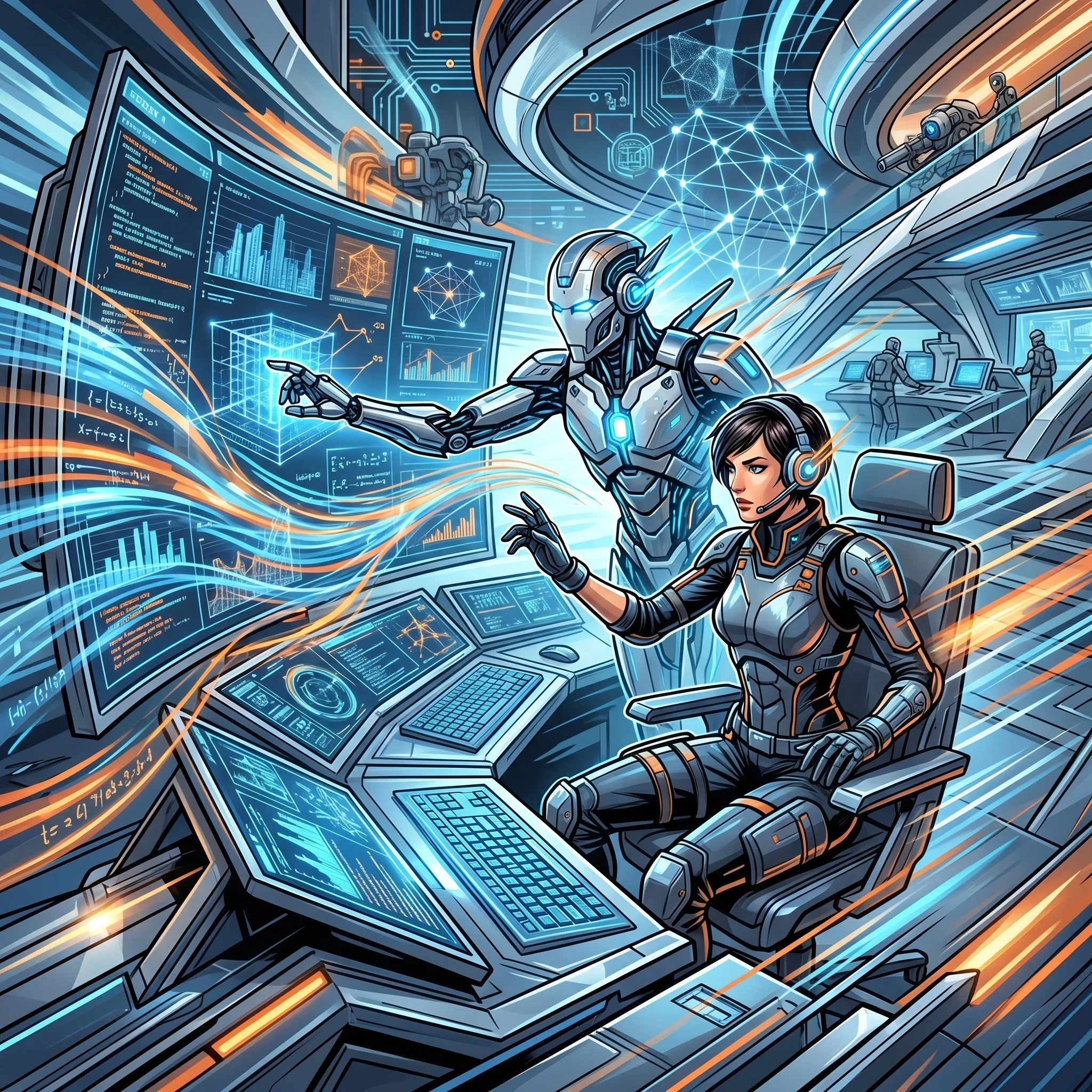 “Human and AI working together at a digital workstation”
Can AI Be Detected?
Partially.
Several AI detection tools attempt to estimate whether content was AI-generated.
Examples include:
These systems analyze:
- predictability;
- sentence structures;
- linguistic consistency; and
- probability patterns.
However…
AI detection remains imperfect.
The Difficulty of Detection
This is where things become complicated.
AI detectors frequently:
- misclassify human writing;
- miss AI-generated content; and
- generate inconsistent results.
As AI improves, the distinction between human and machine-generated content continues to blur.
This creates:
- trust challenges;
- authenticity concerns;
- misinformation risks; and
- ethical questions.
Why This Matters for Online Business
AI is rapidly reshaping:
- SEO;
- blogging;
- affiliate marketing;
- advertising;
- social media; and
- customer service.
Businesses now face an important challenge:
👉 using AI efficiently without losing human authenticity.
Because despite technological advances…
people still trust:
- stories;
- personality;
- humor;
- emotion; and
- the lived experience.
much more than perfectly optimized machine output.
 “Human fingerprint overlaying digital AI circuitry”
Affiliate Disclaimer
This article may contain affiliate links. If purchases are made through these links, I may earn a commission at no additional cost to you.
Amazon Disclaimer
As an Amazon Associate, I earn from qualifying purchases.
Final Thought
Artificial Intelligence is not simply changing technology.
It is changing:
- communication;
- trust;
- creativity;
- identity; and
- online business itself.
The future may not belong entirely to humans…
or entirely to machines.
It will likely belong to those who learn best how to combine:
human authenticity with intelligent automation.
Because in a world increasingly filled with synthetic content…
real personality may become more valuable than ever.
🚀 Call to Action
If you want to learn:
- AI content creation;
- SEO;
- affiliate marketing;
- blogging; and
- online business systems.
then explore
Wealthy Affiliate
and start building digital skills for the AI-driven future.
Hi,
Thank you for sharing this interesting article. The discussion about human-written versus AI-generated content is becoming more relevant every day as AI tools continue to improve and appear across so many websites and platforms online.
I agree that ordinary people can sometimes still notice subtle differences, especially when content feels overly polished, repetitive, or missing genuine emotion and personal perspective. Human experiences and storytelling often create a connection that is difficult for AI to fully replicate.
One thing I found especially thought-provoking is how quickly technology is changing the way content is created and consumed. Do you think there will eventually be a balance where AI helps creators work faster while human creativity and authenticity remain the most valuable part of content creation?
Thanks again for sharing your thoughts on this fascinating topic.
Hi Monica
Thanks for sharing.
Apologizes for the delay, spent all of June in NYC with my daughter and helping her organize her move to Mississippi.
Honestly though, it’s now even harder for people to tell the difference between human-written versus AI-generated content. What has happened is that there is now so much poor Ai generated content that many people feel overwhelmed and are turned off.
Human creativity and authenticity will always be the most valuable part of content creation. The goal therefore is always to strive for genuine human written content.
Paul