
Why the Caribbean Imports So Much: The Structural Economic Problem Explained
Why does the Caribbean import so many goods? Explore the structural economic reasons behind the region’s import dependence and what it means for entrepreneurs and economic development.
Introduction: A Simple Question with a Complex Answer
Walk into almost any supermarket, hardware store, or electronics shop in the Caribbean and you will notice something interesting.
Many of the products on the shelves come from somewhere else.
Food products from North America.
Electronics from Asia.
Clothing from Europe or Latin America.
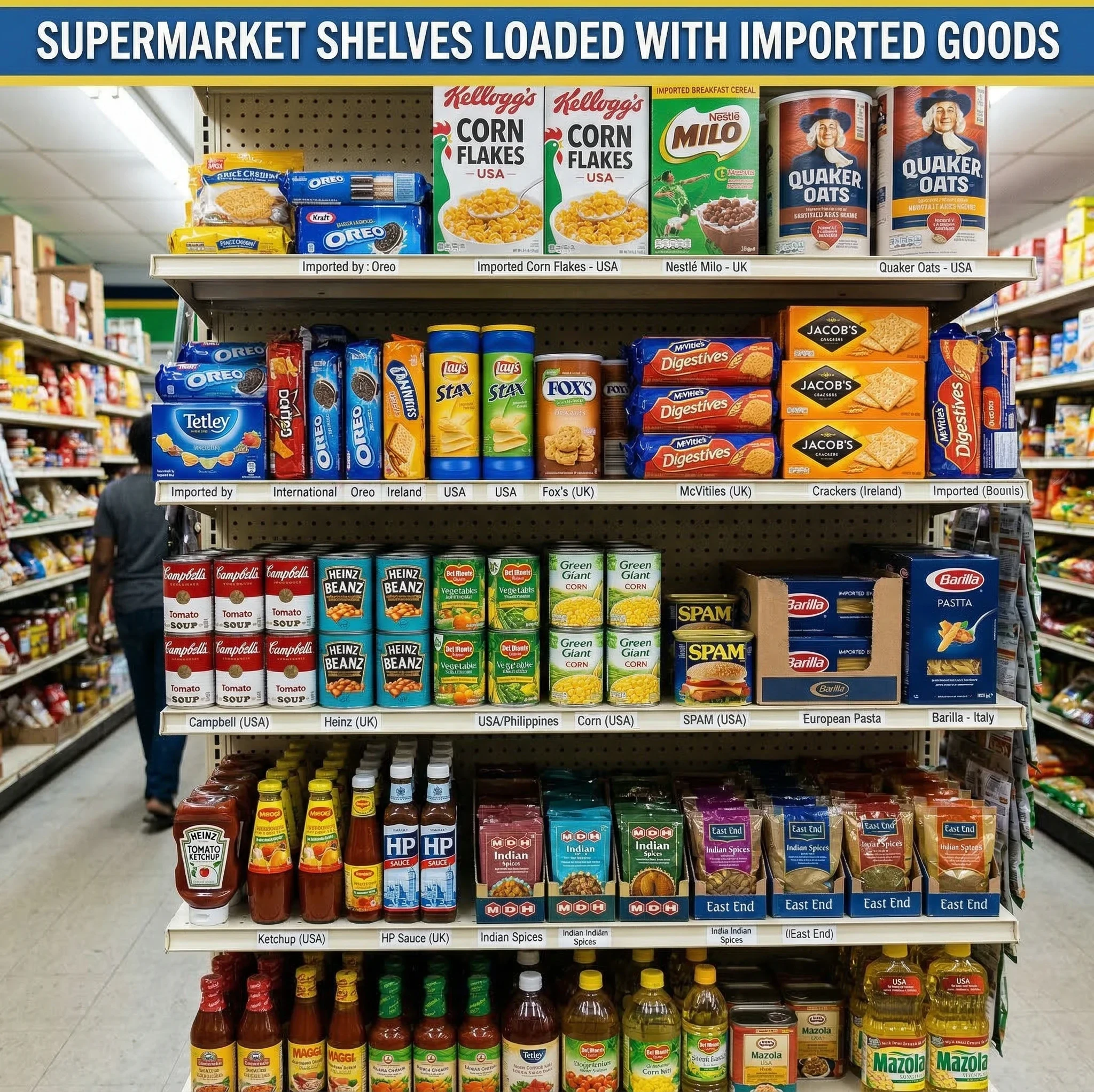
This raises an important question:
Why does the Caribbean import so much of what it consumes?
The answer is not simply about economics—it is tied to history, geography, market size, infrastructure, and global trade systems.
Understanding these structural realities provides insight into how Caribbean economies function today and where opportunities for innovation and entrepreneurship may lie in the future.
The Structural Roots of Caribbean Import Dependence
Caribbean economies did not develop in the same way as large industrial economies.
Several structural factors shaped the region’s economic model.
1. Colonial Economic Systems
Historically, Caribbean economies were built around plantation agriculture during the colonial period.
Colonial powers organized production around a few export crops such as:
- sugar
- cocoa
- coffee
- bananas
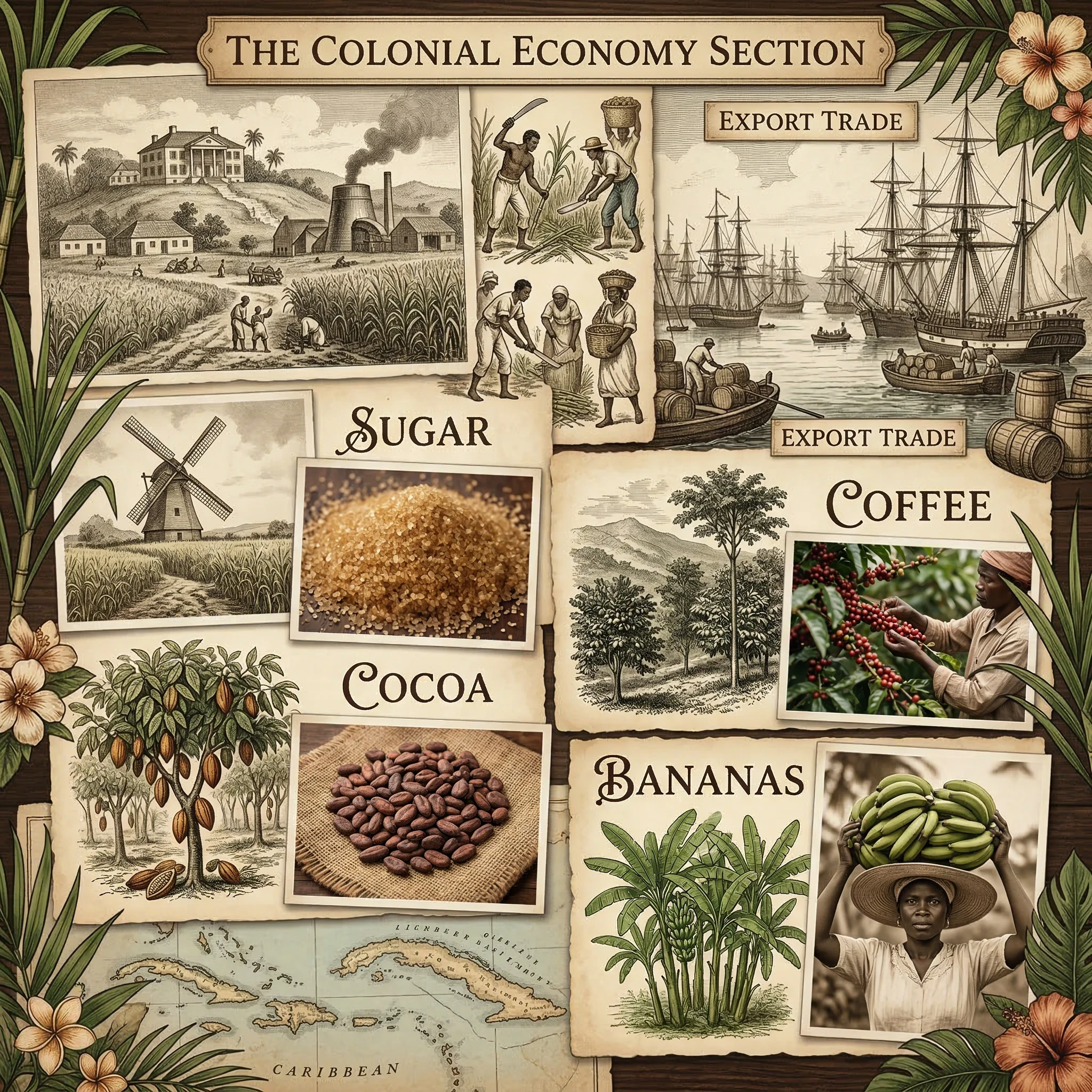
These commodities were exported to European markets while manufactured goods were imported back into the colonies.
Because of this system, the region developed export agriculture rather than diversified manufacturing industries.
Even after independence, many Caribbean nations inherited economic structures that remained heavily dependent on imports.
2. Small Domestic Markets
Most Caribbean countries have relatively small populations.
For example:
- Barbados – under 300,000 people
- Trinidad and Tobago – about 1.4 million
- Jamaica – roughly 2.8 million
Small markets make it difficult for manufacturers to produce goods at large scale.
Without economies of scale, locally produced goods often cost more than imported alternatives.
As a result, importing products becomes economically more practical.
3. High Energy Costs
Manufacturing requires large amounts of energy.
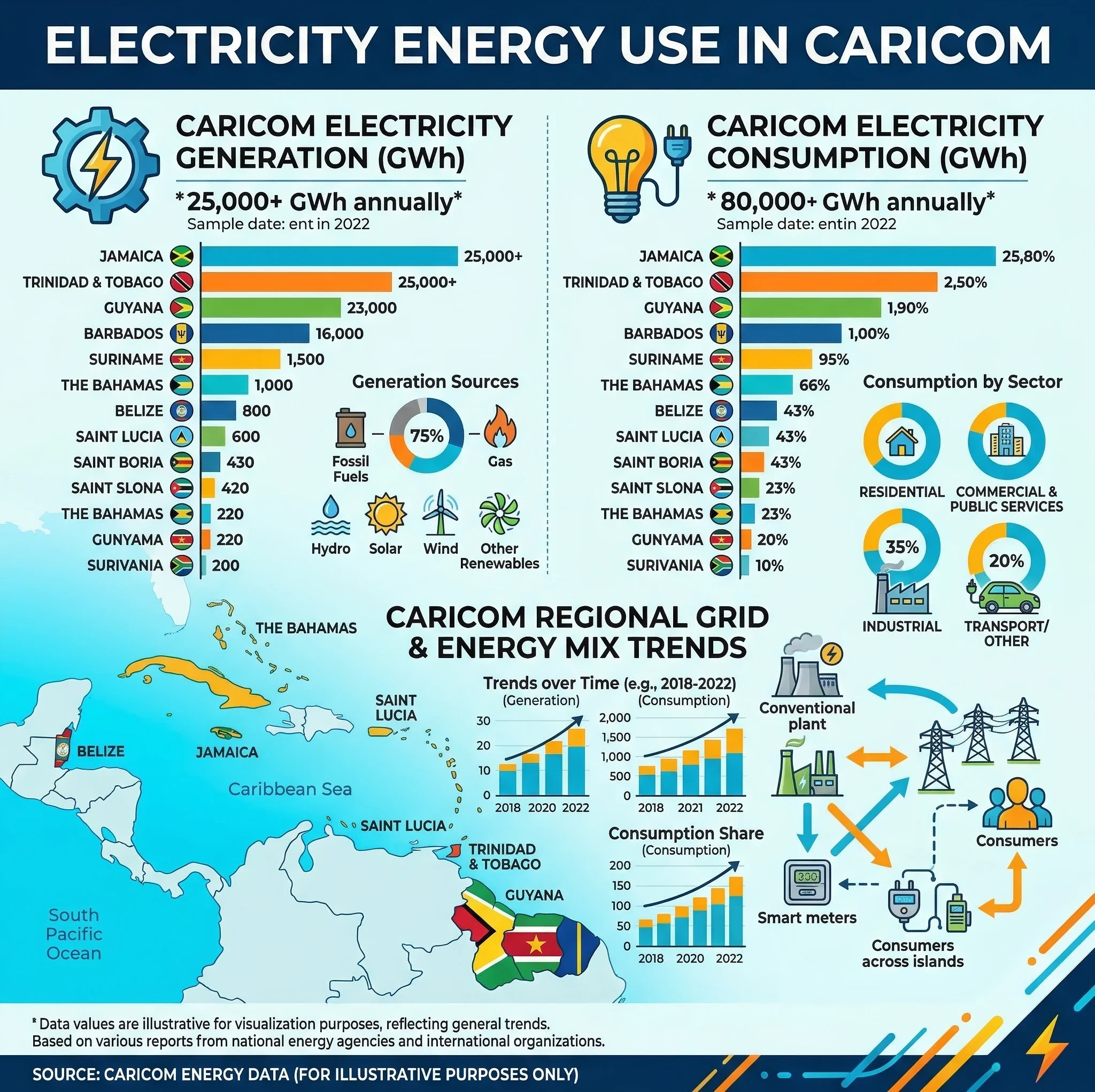
Unfortunately, electricity costs in many Caribbean countries are among the highest in the world because many islands depend heavily on imported fuel.
High energy costs make it difficult for local factories to compete with international manufacturers.
This has discouraged large-scale industrial development.

4. Geographic and Transportation Challenges
The Caribbean is composed of many small islands spread across a large geographic area.
This creates logistical challenges such as:
- shipping costs between islands;
- limited transportation infrastructure; and
- fragmented supply chains.
These factors make regional manufacturing more complex than in large contiguous economies.
5. Tourism-Dominated Economies
In many Caribbean nations, tourism has become the dominant economic sector.
Countries such as:
- Dominican Republic
- Bahamas
- Barbados
rely heavily on tourism revenue.
While tourism generates foreign exchange and employment, it does not necessarily promote manufacturing industries.
Instead, tourism often increases demand for imported goods such as food, construction materials, and consumer products.
6. Natural Disaster Risk
The Caribbean region faces frequent hurricanes and extreme weather events.
Natural disasters can:
- damage infrastructure;
- destroy factories; and
- disrupt supply chains
Because of these risks, investors may hesitate to build large industrial facilities in the region.
The Economic Consequences of Import Dependence
Import reliance has several long-term economic implications.
Trade Imbalances
When a country imports more than it exports, it runs a trade deficit.
Many Caribbean countries experience persistent trade deficits because imported goods exceed export revenues.
Vulnerability to Global Price Changes
Because many essential goods are imported, Caribbean economies are sensitive to global price fluctuations.
Rising fuel prices or shipping costs can quickly increase the cost of living.
Limited Industrial Growth
Heavy reliance on imports can slow the development of local industries.
Without strong domestic production, economic diversification becomes even more difficult.
Opportunities for Economic Transformation
Despite these challenges, the Caribbean also has opportunities to reduce import dependence and strengthen its economies.
Renewable Energy Development
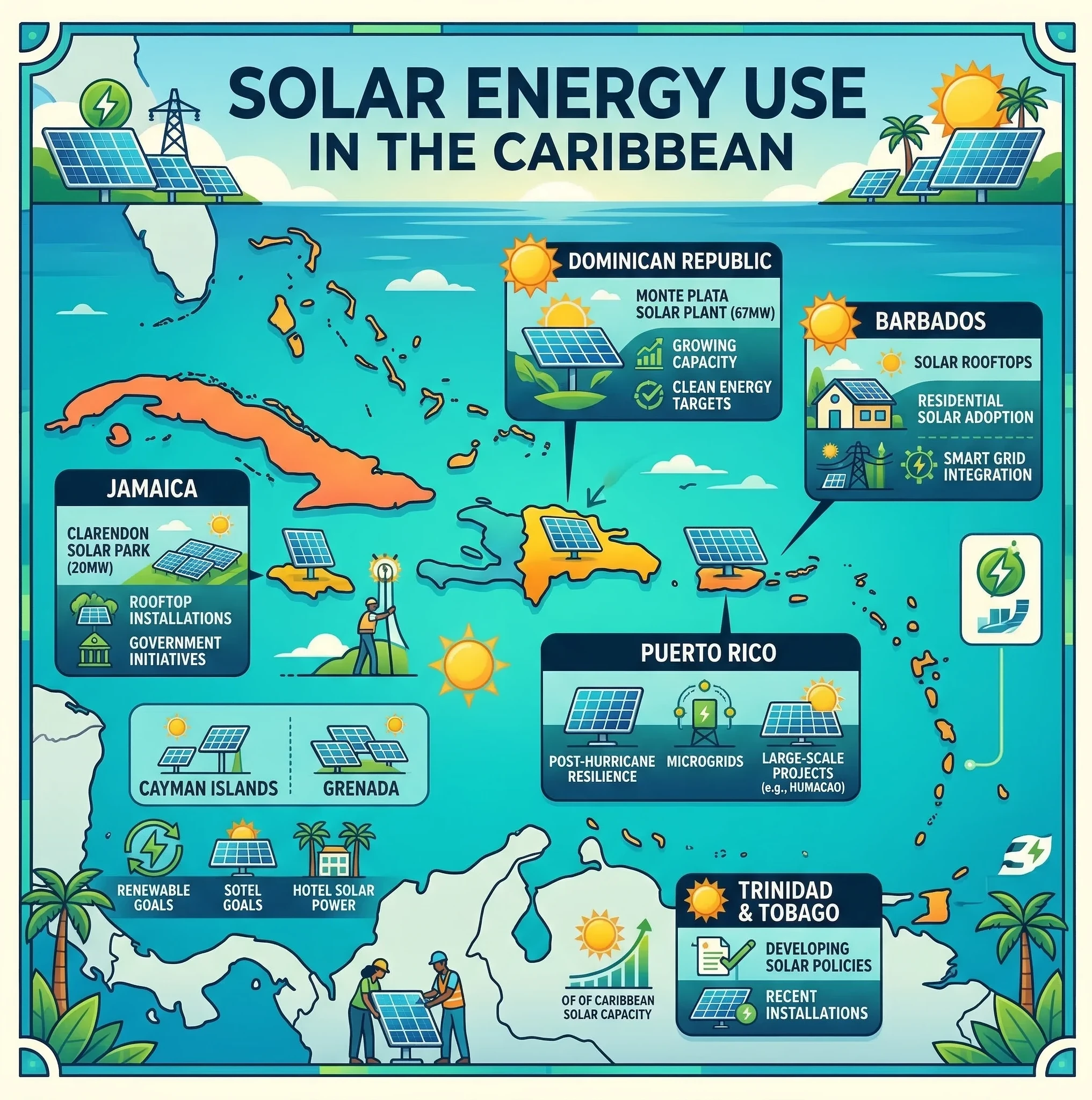
Many Caribbean countries are investing in solar and wind energy to reduce reliance on imported fuel.
Countries like Barbados and Jamaica have already begun expanding renewable energy infrastructure.
Lower energy costs could make local industries more competitive.
Regional Economic Integration
Organizations such as Caribbean Community (CARICOM) promote regional trade and cooperation.
By integrating markets across Caribbean nations, businesses may gain access to larger combined markets.
Digital and Online Entrepreneurship
One of the most promising opportunities for Caribbean residents is the digital economy.
Unlike traditional manufacturing, online businesses are not limited by geography or market size.
This is where digital entrepreneurship becomes especially powerful.

What Wealthy Affiliate Taught Me About Economic Opportunity
One of the most valuable lessons I learned while studying online business is that the internet creates opportunities that transcend geographic limitations.
Platforms such as Wealthy Affiliate teach people how to build websites, generate online traffic, and earn income through affiliate marketing.
Before learning these skills, I viewed economic opportunity mainly through traditional industries.
But the training showed me something important:
You do not need a factory, large capital, or even a large domestic market to start building a business online.
Through affiliate marketing, individuals can recommend products and services and earn commissions when others make purchases through their referral links.
This creates a global marketplace that individuals in smaller economies can access.
Affiliate Disclaimer
Some of the links in this article may be affiliate links. This means I may earn a small commission if you purchase a product or service through these links at no additional cost to you.
Affiliate partnerships help support the creation of educational content like this.
Amazon Affiliate Disclosure
As an Amazon Associate, I earn from qualifying purchases.
This means that if you purchase products through Amazon links recommended on this site, I may receive a commission while you pay the same price.
Recommended Reading
If you want to learn more about global economics, entrepreneurship, or digital marketing, books available through Amazon can be an excellent resource.
Recommended topics include:
- global trade economics;
- digital entrepreneurship; and
- online marketing strategies
Why Joining Wealthy Affiliate Can Be a Game Changer
If you are interested in learning how to build an online business, Wealthy Affiliate provides an excellent starting point.
The platform teaches:
- how to build websites
- search engine optimization
- affiliate marketing strategies
- content creation
- online traffic generation
One of the most valuable aspects of the platform is its community and step-by-step training.
For beginners, this guidance can dramatically shorten the learning curve.
Call to Action
If you are curious about building an online business or exploring the opportunities of affiliate marketing, consider exploring the training available at Wealthy Affiliate.
You can begin learning the fundamentals of digital entrepreneurship and discover how to create opportunities that extend beyond geographic limitations.
Starting with the right knowledge can open doors to entirely new possibilities.

Final Thoughts
The Caribbean’s reliance on imports is the result of centuries of economic development shaped by colonial history, geographic realities, and global trade dynamics.
While these structural factors present challenges, they also highlight the importance of innovation and diversification.
By investing in renewable energy, regional cooperation, and digital entrepreneurship, the Caribbean has the potential to build more resilient and dynamic economies.
In a world increasingly connected by technology, opportunity is no longer defined solely by geography.
Sometimes the most powerful industries are not built in factories—they are built online.